Golden Triangle India Itinerary: 5, 7 & 10-Day
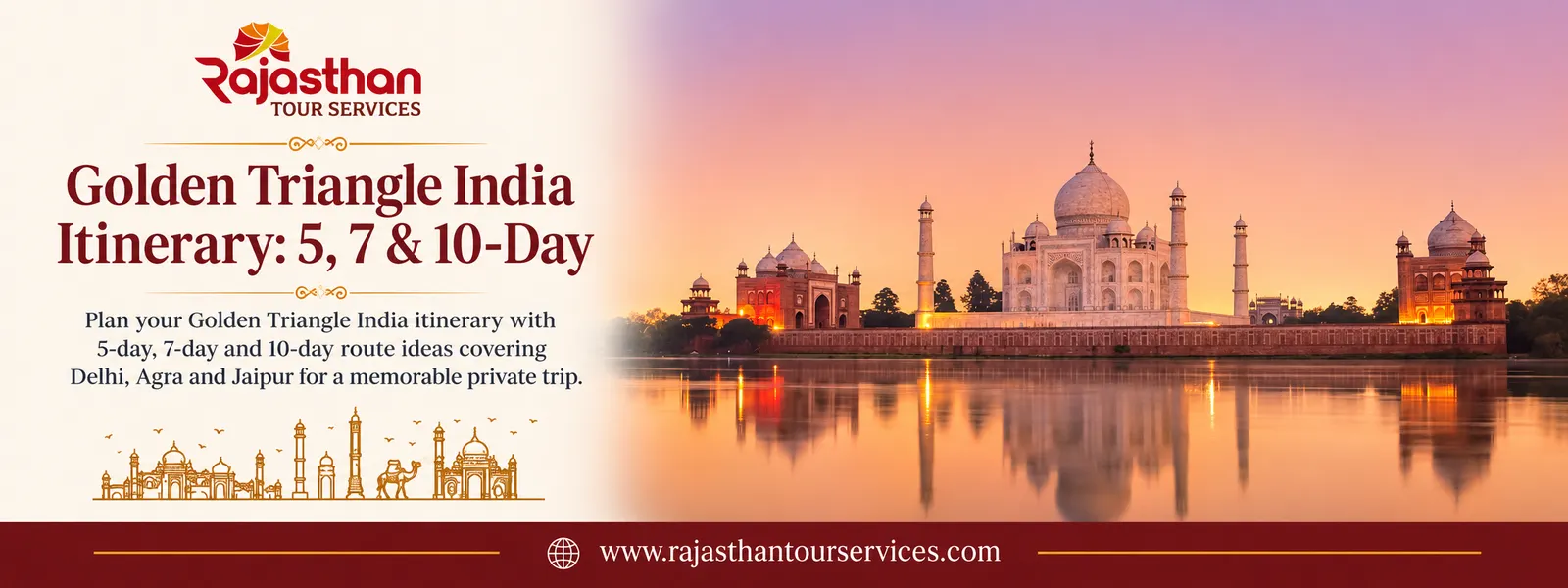
A well-planned Golden Triangle India Itinerary is the easiest way to see the country’s greatest hits on a first trip. The route links three cities, Delhi, Agra and Jaipur, that form a rough triangle on the map. Each leg is about 140 to 175 miles, so you can cover the Taj Mahal, Mughal forts and Rajasthan’s pink-walled capital without long-haul flights inside India. Whether you have five days or ten, the route stretches nicely to fit your schedule.
We’ve been running this route since 2010 at Rajasthan Tour Services, and our Jaipur-based drivers handle it practically every day of the season. Below are our three most popular plans, the same ones we build for American travelers, along with real drive times, timing tips and the small details that make a big difference once you’re on the ground.
Table of Contents
Golden Triangle at a Glance
| Leg | Distance | Drive time | Other options |
|---|---|---|---|
| Delhi to Agra | ~145 miles (230 km) | 3.5–4 hours via the Yamuna Expressway | Gatimaan Express or Vande Bharat train (about 2 hours) |
| Agra to Jaipur | ~150 miles (240 km) | 4.5–5 hours, with stops at Fatehpur Sikri and Abhaneri | Train (about 4–5 hours) |
| Jaipur to Delhi | ~175 miles (280 km) | 5–6 hours | Flight (about 1 hour) or Vande Bharat train |
Best time to go: October through March, when daytime temps are in the 70s °F.
Key rule: The Taj Mahal is closed to general visitors on Fridays, so build your Agra day around it.
5-Day Golden Triangle India Itinerary (Classic Short Trip)
This is the plan for travelers who want the essentials and don’t mind a brisk pace. It works well as a standalone trip or as an add-on to a business trip to Delhi.
Day 1: Arrive in Delhi Land at Indira Gandhi International Airport. Most flights from the US arrive late at night, so rest up. If you have time in the afternoon, visit Humayun’s Tomb, a UNESCO World Heritage Site and the garden tomb that later inspired the Taj Mahal, then catch the evening light at India Gate.
Day 2: Old and New Delhi Start at the Jama Masjid, one of India’s largest mosques, then take a cycle-rickshaw ride through the lanes of Chandni Chowk for street food and spice markets. After lunch, see the Qutub Minar, a 238-foot victory tower dating back to the early 1200s, and drive past the government buildings of Lutyens’ Delhi.
Day 3: Delhi to Agra Leave early on the Yamuna Expressway. In Agra, tour Agra Fort, the red sandstone Mughal citadel, then head to Mehtab Bagh across the river for a sunset view of the Taj Mahal.
Day 4: Taj Mahal at sunrise, then on to Jaipur Be at the Taj gates when they open around sunrise. The light is softer, the marble glows, and the crowds are thinner. After breakfast, drive to Jaipur with a stop at Fatehpur Sikri, Emperor Akbar’s abandoned 16th-century capital.
Day 5: Jaipur and back to Delhi Visit Amber Fort in the morning, photograph the Hawa Mahal, then explore the City Palace and Jantar Mantar, an 18th-century astronomical observatory. Drive or take an evening flight back to Delhi for your international departure.
Trending Tour Packages
Golden Triangle Tour with Varanasi
Delhi, Agra, Jaipur, Varanasi

Rajasthan Tour With Varanasi
Delhi, Agra, Jaipur, Ranthambore, Orchha, Khajuraho, Varanasi
Golden Triangle Private Tour
Delhi, Agra, Jaipur
7-Day Golden Triangle India Tour Itinerary (Our Most Popular)
This is the plan we recommend to most first-time US visitors. It gives every city room to breathe and leaves time for the experiences people remember most.
Day 1: Arrive in Delhi. Airport pickup, hotel check-in and rest.
Day 2: Delhi sightseeing. Old Delhi in the morning: Jama Masjid, Chandni Chowk and the Red Fort from outside. New Delhi in the afternoon: Humayun’s Tomb, Qutub Minar and India Gate.
Day 3: Delhi to Agra. Drive in the morning, tour Agra Fort after lunch, and watch the sunset from Mehtab Bagh.
Day 4: Taj Mahal sunrise and Agra. See the Taj at dawn, return to the hotel for breakfast, then visit Itimad-ud-Daulah, nicknamed the “Baby Taj,” and a family-run marble inlay workshop where artisans still use techniques from the Mughal era.
Day 5: Agra to Jaipur via Fatehpur Sikri and Abhaneri. Stop at Fatehpur Sikri, then at Chand Baori in Abhaneri, one of India’s deepest stepwells, with about 3,500 steps cut in perfect geometric patterns. It’s a stop most itineraries skip, and our guests often call it a highlight.
Day 6: Jaipur, the Pink City. Amber Fort in the morning (arrive early to beat the tour buses), a photo stop at Jal Mahal, then City Palace, Jantar Mantar and Hawa Mahal. Finish with shopping for block-print textiles and blue pottery in Johari and Bapu Bazaars.
Day 7: Jaipur to Delhi. A relaxed morning, maybe a cooking class or a visit to Nahargarh Fort, then drive or fly back to Delhi for your flight home.
10-Day Golden Triangle Itinerary with Ranthambore and Udaipur
With ten days, you can add a tiger safari and the lake city of Udaipur, the two extensions our American guests ask for most.
Day 1: Arrive in Delhi
We’ll meet you at Indira Gandhi International Airport and drive you to your hotel. Most flights from the US land late at night, so the first day is for rest. If you arrive earlier, take an easy evening walk around Connaught Place or Khan Market for dinner.
Day 2: Old and New Delhi
Start in Old Delhi at the Jama Masjid, one of India’s largest mosques. Then take a cycle-rickshaw ride through Chandni Chowk for street snacks and the spice market, and drive past the Red Fort. In the afternoon, visit Humayun’s Tomb, the garden tomb that inspired the Taj Mahal, and the Qutub Minar, a 238-foot tower built in the early 1200s. End the day at India Gate.
Day 3: Delhi to Agra
After breakfast, drive about 3.5 to 4 hours on the Yamuna Expressway to Agra. Check in, have lunch, and then tour Agra Fort, the red sandstone fortress where Shah Jahan spent his last years looking out at the Taj. Finish at Mehtab Bagh across the Yamuna River for a sunset view of the Taj Mahal.
Day 4: Taj Mahal at Sunrise and Agra
Be at the Taj Mahal gates when they open around sunrise, when the light is soft and the crowds are thinner. Head back to the hotel for breakfast. Then visit Itimad-ud-Daulah, the “Baby Taj,” and a marble inlay workshop where artisans still use Mughal-era techniques. The afternoon is free to rest or shop. Remember: the Taj is closed on Fridays.
Day 5: Agra to Ranthambore via Fatehpur Sikri
Leave Agra in the morning and stop at Fatehpur Sikri, Emperor Akbar’s abandoned 16th-century capital. Continue to Sawai Madhopur, about 5 to 6 hours of driving in total. Check in to your jungle lodge and spend the evening relaxing.
Day 6: Ranthambore Tiger Safaris
Go out on an early-morning safari into Ranthambore National Park, one of India’s best places to spot wild Bengal tigers, along with leopards, sloth bears and crocodiles. Rest at the lodge through midday, then head out on an afternoon safari. If you have time, visit the Ranthambore Fort ruins inside the park. The park’s core zones close from July through September.
Day 7: Ranthambore to Jaipur
Drive about 3.5 hours to Jaipur, the Pink City. After check-in, spend the evening seeing the Hawa Mahal lit up, then have dinner at a rooftop restaurant overlooking the old city.
Day 8: Jaipur Sightseeing
Get to Amber Fort early, before the tour buses arrive, and stop for photos at Jal Mahal on the way back. In the afternoon, see the City Palace and Jantar Mantar, an 18th-century observatory that’s a UNESCO World Heritage Site. Finish in Johari and Bapu Bazaars for block-print textiles, blue pottery and silver jewelry.
Day 9: Jaipur to Udaipur
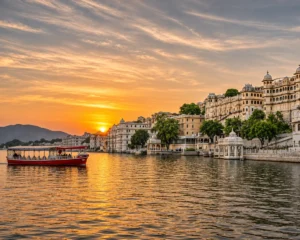
Take a short morning flight or drive about 6 to 7 hours to Udaipur, the City of Lakes. In the late afternoon, take a boat ride on Lake Pichola and watch the sun set over the palaces and ghats.
Day 10: Udaipur and Departure
Tour the City Palace of Udaipur, Rajasthan’s largest palace complex, and the nearby Jagdish Temple. If you have time before your flight, stroll through Saheliyon-ki-Bari, the “Garden of the Maidens.” Then catch a domestic flight to Delhi or Mumbai to connect with your flight home to the US.
Not into wildlife? Swap Ranthambore for Pushkar and its sacred lake, or add Varanasi by flight for the evening Ganga Aarti ceremony.
How to Get Around: Private Car vs. Train
Most American travelers do the Golden Triangle by private car with a driver, and for good reason. You leave when you want, stop at places like Fatehpur Sikri and Abhaneri on the way, and your luggage stays in the car. A good driver also handles navigating India’s chaotic traffic, which we don’t recommend Americans try themselves.
Trains are a fun option for one leg. The Gatimaan Express and the Vande Bharat trains between Delhi and Agra are fast and comfortable. Book through the official IRCTC site, keep a close eye on your bags, and expect delays during foggy winter mornings from late December into January.
Insider Tips From Our Jaipur Team
These are the things we tell every guest before they arrive:
- Never plan the Taj Mahal for a Friday. It’s closed to general visitors. Many first-timers find this out too late.
- Go to the Taj at sunrise, not midday. You’ll avoid the heat and the biggest crowds, and you’ll get far better photos.
- Keep Delhi short in winter. From November to January, Delhi’s air quality can be poor. One or two days is plenty.
- Start early at Amber Fort. It gets crowded by late morning, especially on weekends.
Hire licensed guides. Government-approved guides carry official ID and know the history far better than the touts at the gates. - Watch out for the gem scam in Jaipur. If a stranger offers you a “business deal” to carry gems home, walk away.
- Pack layers. Winter mornings in Agra and Jaipur can be in the 40s °F, then warm to the 70s by afternoon.
- Leave a buffer day before your flight home if you’re traveling in late December or January, when fog can delay domestic flights and trains.
Ready to Plan Your Golden Triangle Trip?
Get a free, customised itinerary from our local travel experts — no obligation, no spam. Just tell us your dates and preferences.
Which Golden Triangle Itinerary Is Right for You?
- 5 days: Best if you’re short on time or adding India to another trip. Expect a fast pace.
- 7 days: The right balance for most first-timers. Every major sight, with time to relax.
- 10 days: Ideal if you want wildlife, lakes and a deeper look at Rajasthan beyond the three main cities.
Conclusion
The Golden Triangle earns its reputation. In one short loop, you’ll go from Old Delhi’s spice markets to the Taj Mahal at dawn to the hilltop forts of Jaipur, and it’s the trip that makes most of our American guests start planning their next visit to India before they’ve even left.
If you’d like a local team handling the drivers, guides and hotels while you enjoy the ride, talk to Rajasthan Tour Services. We’ll shape any of these plans around your dates, pace and interests.
Popular Tour Packages
 Bestseller
Golden Triangle Tour from USA
Delhi, Agra, Jaipur
 Bestseller
Golden Triangle Tour with Udaipur
Delhi, Agra, Jaipur, Udaipur
 Bestseller
India Village Tour
Delhi, Jaipur, Udaipur, Pushkar, Narlai, Mandawa, Bagru, Bishnoi
Frequently Asked Questions
Seven days is ideal for most travelers. Five days covers the highlights at a fast pace, and ten lets you add Ranthambore and Udaipur.
Most tours run Delhi to Agra to Jaipur and back to Delhi. That order lets you see the Taj Mahal early and stop at Fatehpur Sikri on the drive to Jaipur.
October through March, when the weather is dry and mild. April to June is extremely hot on the plains.
Yes. It's India's most-traveled tourist route, with well-established hotels, guides and transport. Use a reliable driver and follow standard travel precautions.
Yes. The Delhi–Agra and Agra–Jaipur legs both have train connections, but a private car gives you more flexibility and lets you stop at sights along the way.