Places to Visit in Delhi: A Traveler’s Guide (2026-27) 2026-27 Travel Guide
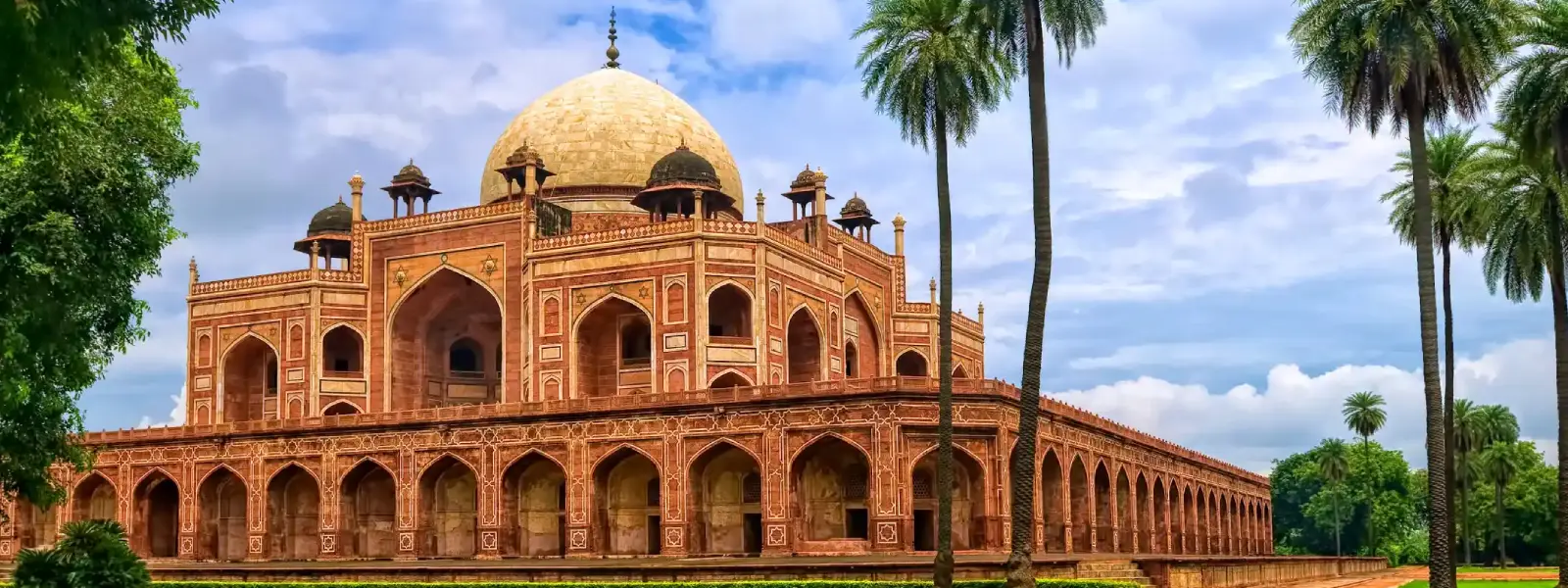
The best places to visit in Delhi are the Red Fort, Humayun’s Tomb, Qutub Minar, India Gate, Jama Masjid with Chandni Chowk, the Lotus Temple, Akshardham, Lodhi Garden, and Agrasen ki Baoli. Three of them, Red Fort, Humayun’s Tomb, and Qutub Minar, are UNESCO World Heritage Sites. Most Delhi places to visit can be covered in two to three days.
The best season is October to March, when daytime temperatures are pleasant; summers can reach 45°C. Several attractions, including the Red Fort, Lotus Temple and Akshardham, are closed on Mondays. Ticketed monuments cost roughly ₹35–₹40 for Indian citizens and ₹550–₹600 for foreign visitors, while parks, the Lotus Temple and India Gate are free.
I have walked through Delhi in both October and February, and the city rewards slow travel. Here is what each place is actually like, what it costs, and how to fit it into your plan.
Table of Contents
Delhi Attractions at a Glance
| Place | Best for | Weekly closure | Entry fees (approx.) | Timing (approx.) |
|---|---|---|---|---|
| Red Fort | Mughal history | Monday | ₹35 Indians / ₹550–600 foreigners | 9:30 am–4:30 pm |
| Jama Masjid & Chandni Chowk | Food, old Delhi | None (visitor limits at prayer times) | Free (camera fee may apply) | ~7 am–12 pm, 1:30 pm–sunset |
| Humayun’s Tomb | Architecture, photography | None | ₹40 Indians / ₹600 foreigners | Sunrise–sunset |
| India Gate | Evening walks | None | Free | Open all day, best at sunset |
| Qutub Minar | Medieval heritage | None | ₹40 Indians / ₹600 foreigners | Sunrise–sunset |
| Lotus Temple | Quiet, architecture | Monday | Free | ~9:30 am–5:30 pm (later in summer) |
| Akshardham | Culture, evening show | Monday | Main monument free; exhibitions and water show ticketed | ~10 am–6:30 pm |
| Lodhi Garden | Relaxing mornings | None | Free | ~6 am–8 pm |
| Agrasen ki Baoli | Quick photo stop | None | – | – |
| Connaught Place | Shopping | Sunday | – | – |
Trending Tour Packages
Bestseller
Rajasthan Desert Tour Package
Jaipur, Jaisalmer, Bikaner, Jodhpur, Pushkar, Ajmer
Bestseller
Rajasthan Tour in December
Jaipur, Udaipur, Jaisalmer, Bikaner, Jodhpur, Pushkar
10 Days Rajasthan Tour Package
Jaipur, Udaipur, Jaisalmer, Bikaner, Jodhpur, Mount Abu
Best Places to Visit In Delhi
1. Red Fort (Lal Qila)
My first stop in Delhi is always the Red Fort. Shah Jahan built it between 1639 and 1648 when he moved the Mughal capital from Agra, and it became a UNESCO site in 2007. The red sandstone walls look imposing from Chandni Chowk, but the real charm is inside: the Diwan-i-Aam, the Diwan-i-Khas, and the small museums in the barracks. Arrive at 9:30 am to beat tour groups. Plan on two hours, and carry only a small bag because security checks are strict. The fort is closed on Mondays, and the evening sound-and-light show runs in the cooler months.
2. Jama Masjid and Chandni Chowk
Just a short walk from the fort stands Jama Masjid, completed in 1656 and still one of India’s largest mosques. Entry is free, though cameras may carry a fee, and visitors must dress modestly; scarves and wraps are available at the gate. Climbing the minaret gives a rooftop view of Old Delhi’s tangled wires and kite-flying terraces. Afterward, step into Chandni Chowk for paratha at Parathe Wali Gali, jalebi, and kebabs at Karim’s, which has been serving near the mosque since 1913. Go hungry and use a cycle-rickshaw to get through the lanes.
3. Humayun’s Tomb
If you only have time for one monument, make it this one. Humayun’s Tomb, built in the 1560s and commissioned by his widow Bega Begum, is widely described as the first garden-tomb on the Indian subcontinent and a forerunner of the Taj Mahal. It became a UNESCO site in 1993. The charbagh garden, red sandstone, and white marble are beautiful in the late afternoon light. The restored Sunder Nursery next door makes a lovely follow-up walk and is a favourite with photographers. Allow ninety minutes.
4. India Gate and Kartavya Path
India Gate is a 42-metre war memorial designed by Edwin Lutyens and completed in 1931, honouring Indian soldiers who died in World War I and the Third Anglo-Afghan War. The avenue leading to it, formerly Rajpath, was renamed Kartavya Path in 2022. Go around sunset, when the lawns fill with families and the structure is lit up. The nearby National War Memorial is free and worth a quiet visit. Expect street vendors selling ice cream and kulfi, and note that the area gets crowded on weekends and public holidays.
5. Qutub Minar
At 72.5 metres, Qutub Minar is the tallest brick minaret in the world. Construction began in 1193 under Qutb-ud-din Aibak and continued under later rulers, and the complex became a UNESCO site in 1993. Climbing the tower is no longer permitted, but the surrounding ruins are the real draw: the Quwwat-ul-Islam mosque, ornate carved arches, and the Iron Pillar, a metal column more than 1,500 years old that has famously resisted rust. Visit in the morning for softer light and thinner crowds.
6. Lotus Temple
The Lotus Temple is a Bahá’í House of Worship, opened in 1986 and designed by architect Fariborz Sahba. Its 27 white marble petals form a lotus, and the quiet interior is open to people of all faiths. Entry is free, and visitors are asked to maintain silence inside. The queue moves quickly, so about an hour is enough. It is closed on Mondays, and the gardens look best in the early evening.
7. Swaminarayan Akshardham
Akshardham opened in 2005 and showcases Indian architecture, with intricately carved pink sandstone and marble. The main monument is free to enter, while the exhibitions and the musical fountain show carry separate tickets. Mobile phones, cameras, and bags must be deposited at the cloakroom, so travel light. Reserve a full half-day, and stay for the evening water show. It is closed on Mondays.
8. Lodhi Garden
After days of monuments, Lodhi Garden is a gentle reset. This free park contains 15th-century tombs of the Sayyid and Lodi dynasties set among old trees and walking paths. I came here on a February morning and found joggers, bird-watchers, and families having picnics. It is a good place to slow down and enjoy a relaxed start before the heat builds.
9. Agrasen ki Baoli
Tucked between modern buildings near Connaught Place, this 14th-century stepwell has roughly a hundred stone steps descending into shade. It takes about thirty minutes, making it an easy add-on after India Gate. Visit early in the morning for fewer crowds; the symmetry of the arches is striking, and the site is free to enter.
10. Connaught Place
Often referred to as CP, this is one of the most well-known areas in New Delhi. The circular area with colonnaded buildings, shops, restaurants and cafes makes this a convenient place to visit.
This is a great place for a relaxed meal, shopping, coffee, or an evening stroll after visiting nearby historical sites.
Ready to Plan Your Rajasthan Trip?
Get a free, customised itinerary from our local travel experts — no obligation, no spam. Just tell us your dates and preferences.
Best Time to Visit Delhi
October to March is the sweet spot. Days are warm and dry, evenings are cool, and outdoor sites such as Humayun’s Tomb and Qutub Minar are comfortable to explore. December and January can bring morning fog and cold snaps. April to June is very hot, so sightsee early and rest at midday. During monsoon, from July to September, humidity is high, but crowds are smaller.
How to Get Around
The Delhi Metro is the most reliable option for tourists, reaching most of the places above and avoiding traffic. Buy a Tourist Card or use a smart card for convenience. For spots without direct metro access, use app-based cabs or auto-rickshaws, and agree on a fare or insist on the meter. Keep an hour of buffer when travelling during rush hours, roughly 8:30–10:30 am and 5–8 pm.
A Sample 3-Day Itinerary
| Day | Area | Places to Visit |
|---|---|---|
| Day 1 | Old Delhi | Red Fort, Jama Masjid, Chandni Chowk food walk |
| Day 2 | Lutyens’ Delhi and heritage | Humayun’s Tomb, Sunder Nursery, Lodhi Garden, India Gate at sunset |
| Day 3 | South Delhi and culture | Qutub Minar, Lotus Temple, Akshardham in the late afternoon for the evening show |
If you have just one day: combine the Red Fort, Humayun’s Tomb and India Gate.
Practical Tips from the Road
- Carry ID and keep valuables close in crowded markets.
- Dress modestly at religious sites, and carry socks for marble floors in summer.
- Drink bottled water and eat at busy, popular stalls.
- Check ASI ticket prices and timings before you go, since fees and hours are revised from time to time.
- Book official tickets online where available to skip the queue.
Combining Delhi with Rajasthan
Delhi is the natural starting point for the Golden Triangle (Delhi, Agra, Jaipur) and onward journeys across Rajasthan. Jaipur is roughly 280 km away, a five-to-six-hour road journey, and Agra is about 230 km away. Many travellers spend two or three days in Delhi before heading to Rajasthan. Rajasthan Tour Services at rajasthantourservices.com can help plan Delhi stopovers as part of a wider Rajasthan itinerary.
Popular Tour Packages
 Bestseller
4 Days Golden Triangle Tour Package
Delhi, Agra, Jaipur
 Bestseller
5 Days Golden Triangle Tour Package
Delhi, Agra, Jaipur
 Bestseller
Delhi Mathura Vrindavan Tour
Delhi, Mathura, Vrindavan, Barsana, Nandgaon VILLAGE, Gokul, Govardhan
 Bestseller
Delhi Agra Mathura Vrindavan Tour
Delhi, Agra, Mathura, Vrindavan, Bharatpur
 Bestseller
Golden Triangle Tour With Tiger Safari 6 Days
Delhi, Agra, Jaipur, Ranthambore
Frequently Asked Questions
Some of the best places to visit in Delhi include Red Fort, India Gate, Qutub Minar, Humayun's Tomb, Lotus Temple, Akshardham Temple, Jama Masjid, Raj Ghat, Lodhi Garden, and Chandni Chowk.
A 2 to 3-day trip is ideal for exploring Delhi's major tourist attractions.
The best time to visit Delhi is from October to March when the weather is pleasant for sightseeing.
Akshardham Temple, India Gate, National Rail Museum, National Zoological Park, Lodhi Garden, Garden of Five Senses, and Nehru Planetarium are the best places to visit in Delhi with family.
Chandni Chowk, Connaught Place, Sarojini Nagar Market, Janpath Market, Dilli Haat, Khan Market, and Lajpat Nagar Market are the best places to visit in Delhi for shopping.
The best places to visit in Delhi in night are India Gate, Connaught Place, Hauz Khas Village, Murthal (near Delhi), rooftop restaurants, and various food streets that remain lively during the evening.