Jaipur Travel Guide Best Places to Visit, Things to Do & Travel Tips
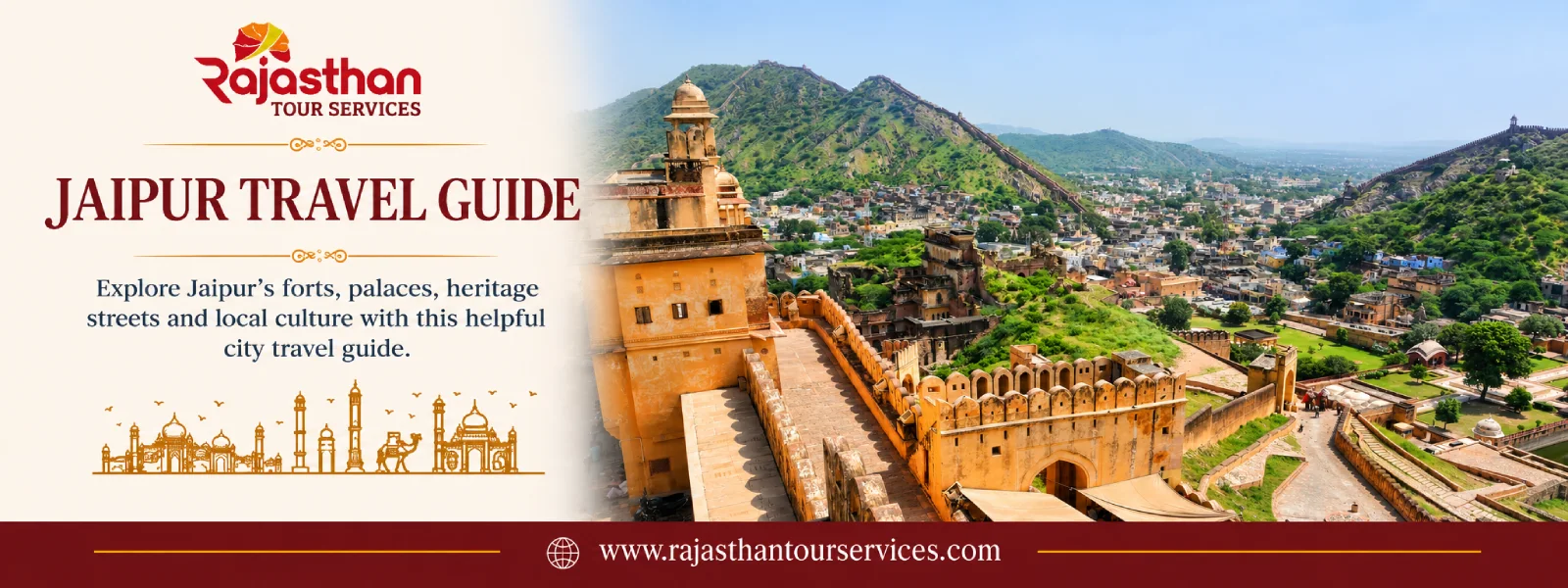
This Jaipur Travel Guide answers four questions every traveller asks: what to see, when to go, how long to stay, and what it costs. Jaipur is best explored over 2–3 days between October and March. Plan to spend a morning at Amber Fort, an afternoon in the old city (City Palace, Jantar Mantar, Hawa Mahal) and an evening watching the sunset from Nahargarh Fort. Leave time for the bazaars, Rajasthani food, and one hands-on experience, such as block printing in Sanganer. Most visitors travel by private car with a driver, and choosing a Jaipur Tour Package that includes the car, hotel, and sightseeing is the easiest way to enjoy the city without the stress of planning. A licensed local guide makes the forts and the observatory far more rewarding. Rajasthan Tour Services plans trips like this every day, from single-day city tour to full Rajasthan holidays.
Table of Contents
Best Time to Visit Jaipur
The Best Time to Visit Jaipur is from October to March. Days are sunny and pleasant (roughly 20–28°C), and nights are cool, dropping to around 8–10°C in December and January. This is also festival season: Diwali lights up the bazaars in October or November, Makar Sankranti fills the sky with kites on 14 January, and the Jaipur Literature Festival takes place in late January.
Summer (April to June) is very hot, often above 40°C, so plan early-morning sightseeing and indoor visits in the afternoon. The reward is lower hotel prices and fewer crowds. The monsoon (July to September) brings green Aravalli hills and lovely views from Nahargarh and Amber, but some days are humid or rainy.
| Season | Months | Weather | Travel recommendation |
|---|---|---|---|
| Winter | October–March | Pleasant days, cool nights | Best for sightseeing |
| Summer | April–June | Very hot | Indoor sightseeing and early starts |
| Monsoon | July–September | Humid with occasional rain | Gardens and scenic views |
Top Places to Visit in Jaipur
Amber Fort
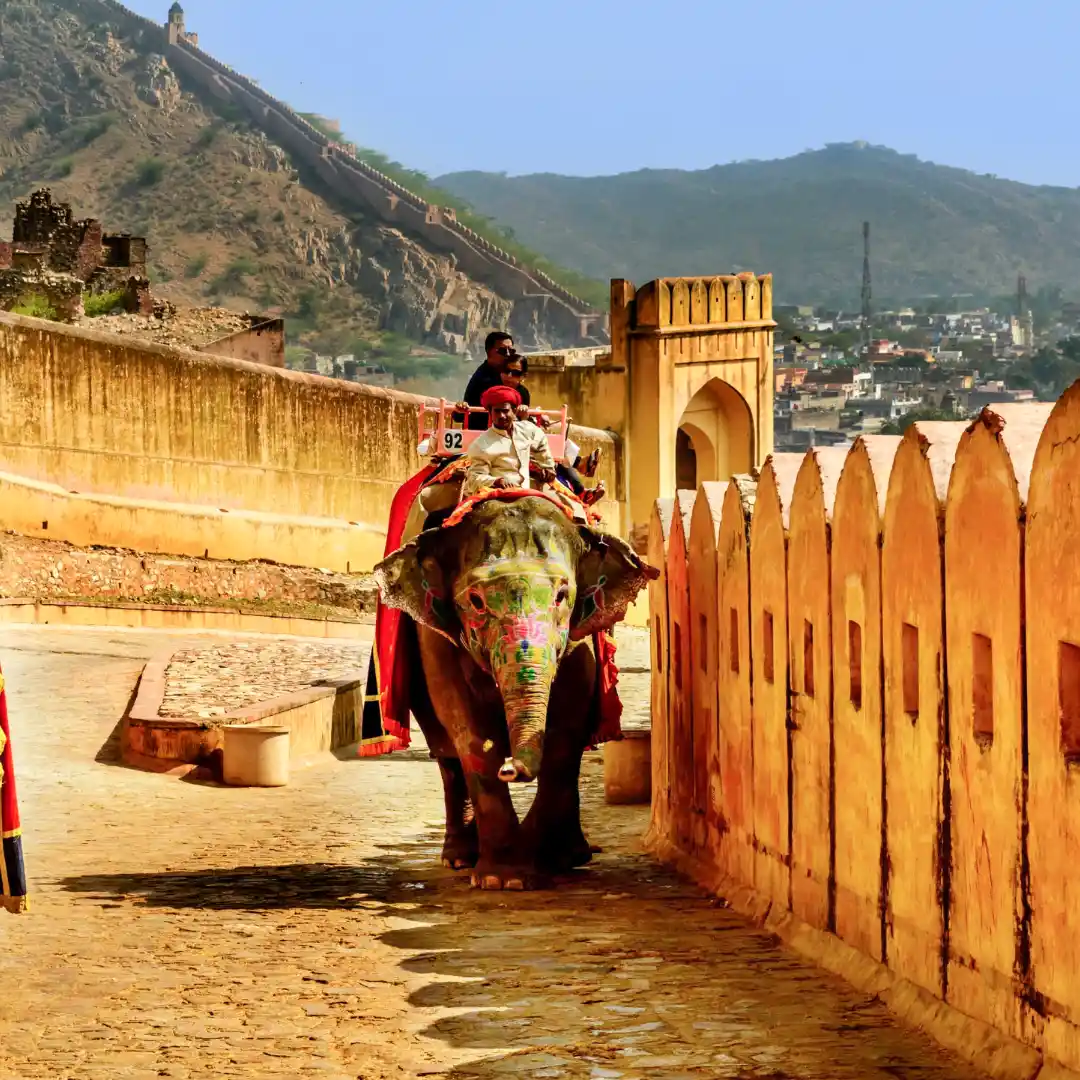 Amber (Amer) Fort, 11 km from the old city, was begun by Raja Man Singh I in 1592 and is part of the UNESCO-listed Hill Forts of Rajasthan. Don’t miss Ganesh Pol, Diwan-e-Aam, Sukh Niwas and Sheesh Mahal, where a single candle once lit up thousands of mirror pieces. Plan 2–3 hours, and hire a licensed guide at the gate. The fort is on the composite ticket, and the evening light and sound show is worth staying for.
Tip: Arrive at opening time, around 8 am, before the tour buses, and wear comfortable shoes for the climb.
Timings: 8:00 AM – 5:30 PM, Daily (night visit 6:30 PM – 9:15 PM; light and sound show in the evening)
Hawa Mahal
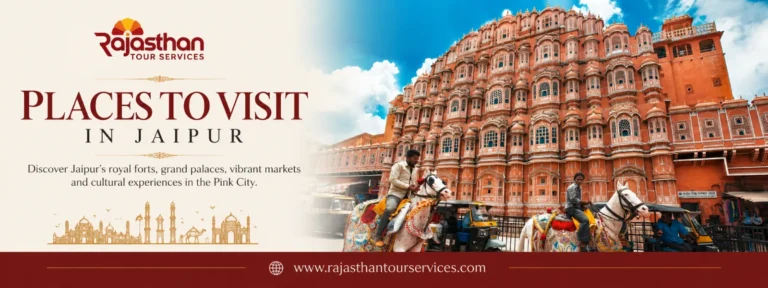
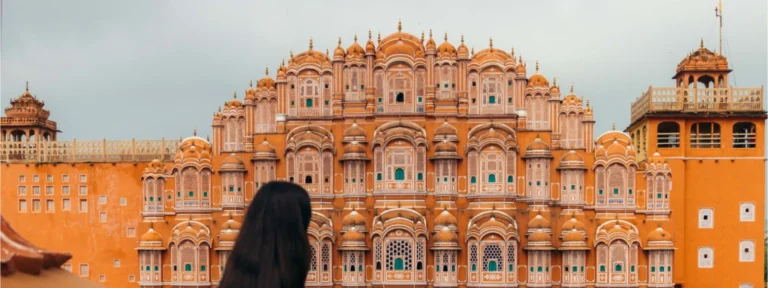
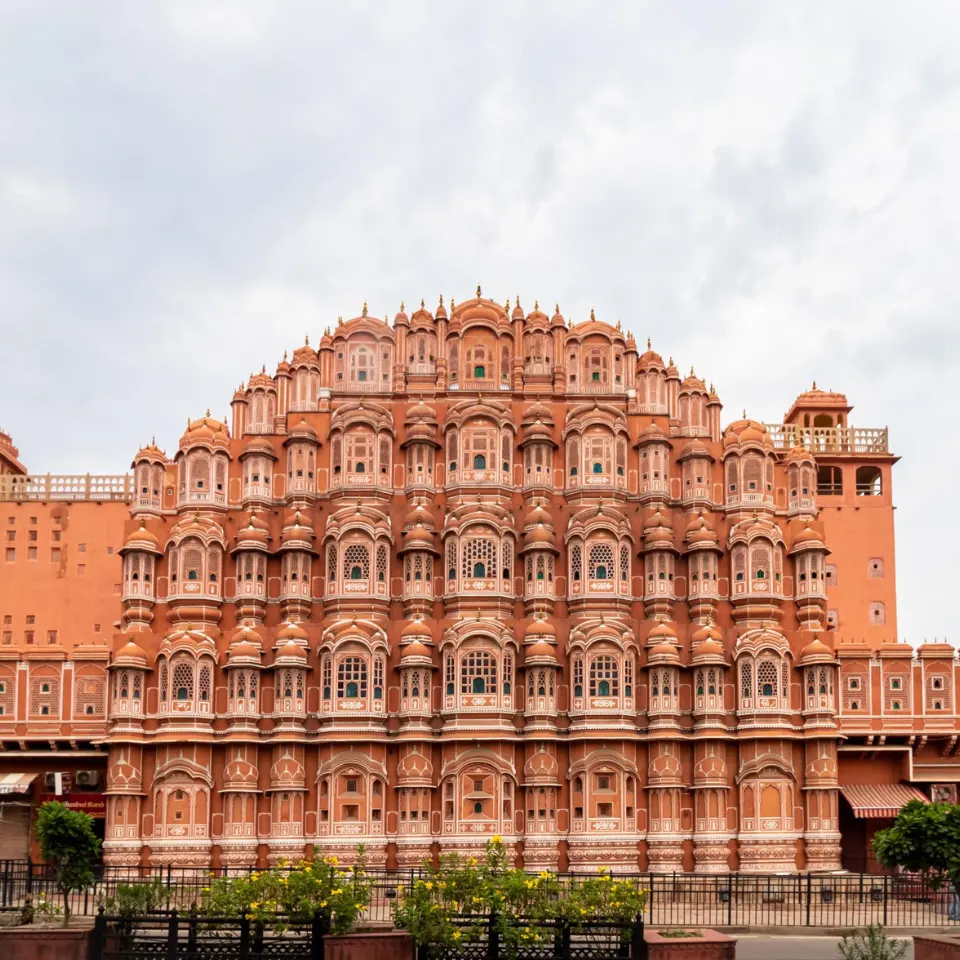 Built in 1799 by Maharaja Sawai Pratap Singh and designed by Lal Chand Ustad, the five-storey “Palace of Winds” has 953 small windows (jharokhas) that let royal women watch street life without being seen. Its shape is said to resemble Lord Krishna’s crown. Inside, ramps lead to the top floors, with views over Jantar Mantar and City Palace. Plan 30–45 minutes. It is on the composite ticket.
Tip: The façade glows in early morning light, and the classic photo is from a rooftop café across the road.
Timings: 9:00 AM – 5:00 PM, Daily
City Palace
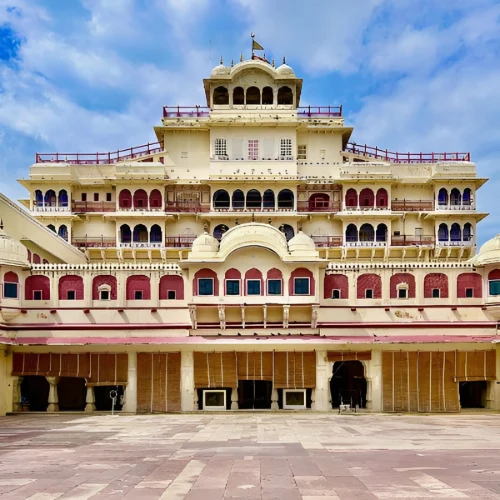 Built by Sawai Jai Singh II from 1727, City Palace blends Rajput and Mughal styles and is still home to Jaipur’s former royal family in Chandra Mahal. Don’t miss the four seasonal gates of Pritam Niwas Chowk, the textile gallery in Mubarak Mahal, the armoury and the two giant silver urns (Gangajali) in Diwan-e-Khas. Plan 1–2 hours. City Palace is privately managed, so it is not on the composite ticket and has its own entry ticket.
Tip: Visit in the morning, then walk next door to Jantar Mantar.
Timings: 9:30 AM – 5:00 PM, Daily (last entry 4:30 PM; night visit 7:00 PM – 10:00 PM)
Jantar Mantar
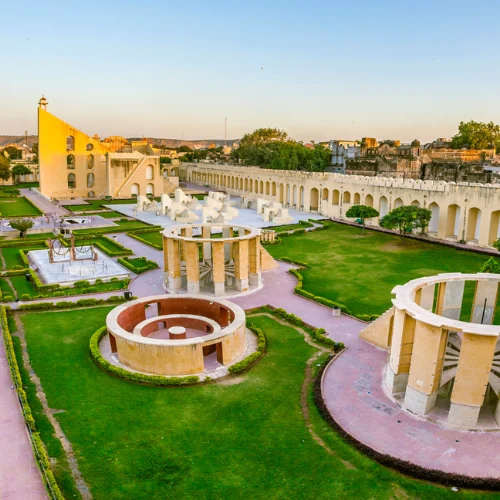 Built by Sawai Jai Singh II between 1728 and 1734, Jantar Mantar is a UNESCO World Heritage Site and the largest of the observatories he built across India. Its 19 instruments measure time, track stars and predict eclipses. The Samrat Yantra, about 27 m tall, is one of the world’s largest stone sundials and tells local time to within about two seconds. Plan 45–60 minutes. It is on the composite ticket.
Tip: Go before noon, when shadows are sharp, and take a guide or audio guide to understand the instruments.
Timings: 9:00 AM – 4:30 PM, Daily
Nahargarh Fort
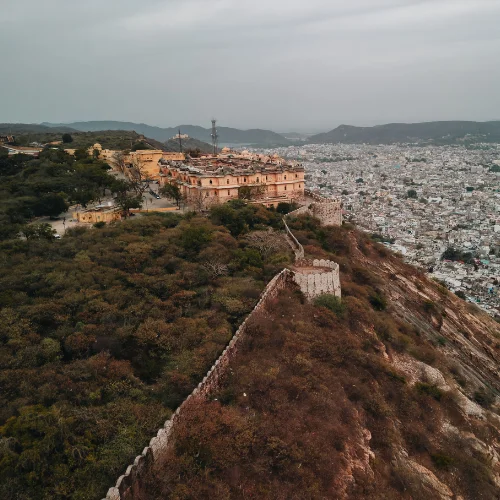 Built in 1734 by Sawai Jai Singh II on the Aravalli ridge, Nahargarh Fort once guarded the city and is now Jaipur’s best sunset point. Inside, Madhavendra Bhawan has nine identical suites for the king’s queens, linked by hidden corridors. The fort is about 6 km from the old city along a winding hill road. Plan 1–2 hours. It is on the composite ticket.
Tip: Arrive by 4–5 pm for the sunset, then stay for a drink or dinner at the fort’s café as the city lights up below.
Timings: 10:00 AM – 5:30 PM, Daily (the fort café stays open later for sunset)
Jaigarh Fort
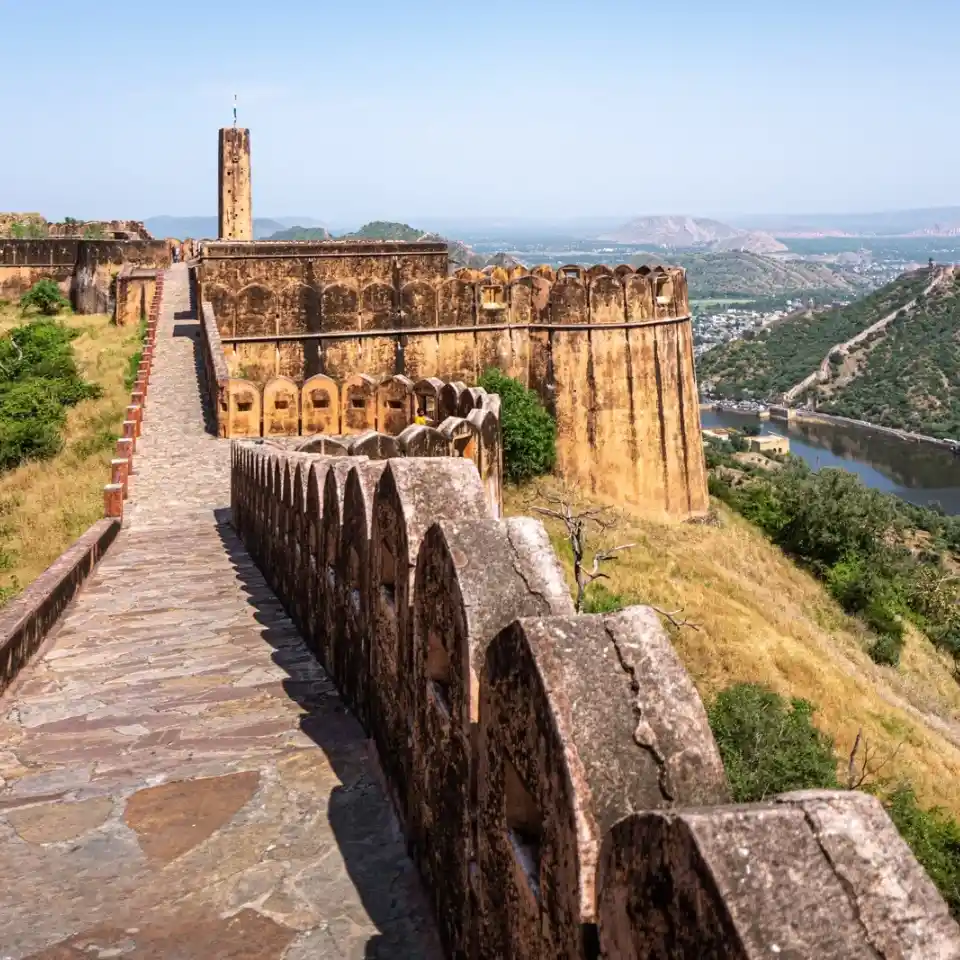 Built in 1726 by Sawai Jai Singh II on Cheel ka Teela hill, Jaigarh Fort was Amber’s military stronghold and is linked to it by a fortified passage. It houses the Jaivana, cast here in 1720 and once described as the world’s largest cannon on wheels. The fort also has an armoury, a museum and huge rainwater tanks. Plan 1–1.5 hours. Jaigarh has its own entry ticket and is not on the composite ticket.
Tip: Combine it with Amber the same morning, and walk the southern ramparts for the best view of Amber Fort.
Timings: 9:00 AM – 4:30 PM, Daily (last entry 4:00 PM)
Jal Mahal
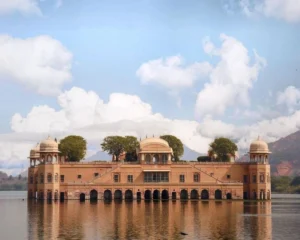
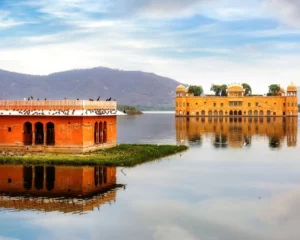
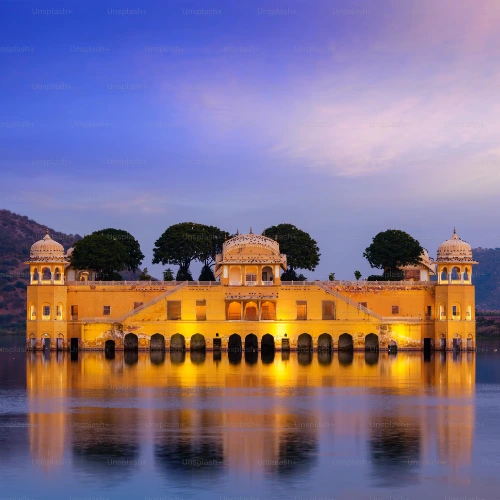 Jal Mahal, the “Water Palace”, stands in the middle of Man Sagar Lake on the Jaipur–Amber road. Built in Rajput style and restored in the 18th century, it has lower floors that lie under water when the lake is full. Visitors can’t go inside, but the lakeside promenade is free and open all day, making it a quick 15–20 minute photo stop.
Tip: Come at sunrise or sunset, when the palace glows against the Aravalli hills, and look out for migratory birds on the lake in winter.
Timings: Lakeside viewpoint open all day, best from 6:00 AM to sunset (no entry inside the palace)
Albert Hall Museum
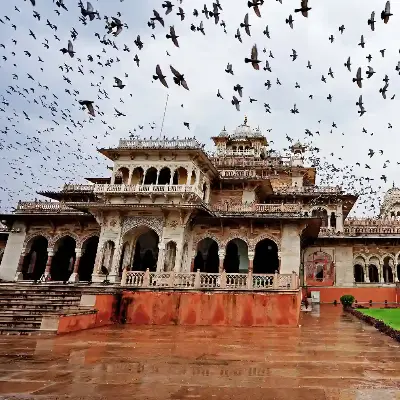 Designed by Samuel Swinton Jacob and opened in 1887, Albert Hall in Ram Niwas Garden is Rajasthan’s oldest museum and a fine example of Indo-Saracenic architecture. The collection includes an Egyptian mummy, miniature paintings, carpets, armour, pottery and coins. Plan 1–1.5 hours. It is on the composite ticket.
Tip: Come after dark, when the building is beautifully lit and night visits are allowed, and combine it with dinner on nearby MI Road.
Timings: 9:00 AM – 5:00 PM, Daily (night visit 7:00 PM – 10:00 PM)
If you want more details you should visit : Places to visit in Jaipur
| Attraction | Famous For | Recommended Time |
|---|---|---|
| Amber Fort | Royal architecture and Sheesh Mahal | 2–3 hours |
| Hawa Mahal | 953 windows and architecture | 30–45 minutes |
| City Palace | Royal museums and courtyards | 1–2 hours |
| Jantar Mantar | Astronomical instruments | 45–60 minutes |
| Nahargarh Fort | Panoramic city views | 1–2 hours |
| Jaigarh Fort | Jaivana Cannon | 1–1.5 hours |
| Albert Hall Museum | Art and historical collections | 1–1.5 hours |
Save with the composite ticket: The Rajasthan Tourism Department sells a two-day composite ticket covering Amber Fort, Hawa Mahal, Jantar Mantar, Nahargarh, Albert Hall and some gardens. Ticket prices were revised from 1 January 2026, so check current rates on the official portal (bookit.rajasthan.gov.in) before you go.
Best Things to Do in Jaipur
- Watch the sunset from Nahargarh Fort, with the whole city spread out below.
- Explore Panna Meena Ka Kund, a 16th-century stepwell near Amber with criss-cross staircases.
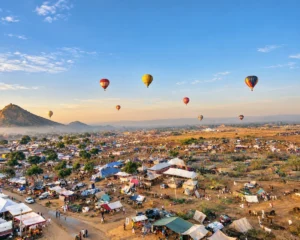
- Take a hot-air balloon ride over Amber and the Aravallis in winter.
- Visit Galta Ji (the Monkey Temple), with temples and natural springs in a rocky gorge.
- Learn block printing in Sanganer, where artisans still print textiles by hand.
- Join an old-city food walk for kachori, lassi and ghewar.
- Spend an evening at Chokhi Dhani, a village-style resort with folk dance, puppet shows and a Rajasthani dinner.
- Watch a Bollywood film at Raj Mandir, one of India’s most famous cinema halls.
- Photograph Patrika Gate, a colourful gateway that is best visited early in the morning.
Jaipur Travel Itinerary for 1, 2 and 3 Days
How Many Days Are Enough for Jaipur?
Two days is enough for most travellers. One day covers the highlights but feels hurried, especially at Amber Fort. With three days, you can add hidden gems, shopping and a cooking or craft experience.
1 day: Start at Amber Fort at 8 am, stop at Jal Mahal, then have a Rajasthani thali for lunch. In the afternoon, visit City Palace, Jantar Mantar and Hawa Mahal.
2 days: Day 1 is Amber, Jaigarh, Panna Meena Ka Kund and sunset at Nahargarh. Day 2 is City Palace, Jantar Mantar, Hawa Mahal, Albert Hall and the bazaars.
3 days: Add Galta Ji, Patrika Gate, Sanganer block printing and an evening at Chokhi Dhani.
| Duration | Places to Cover |
|---|---|
| 1 Day | Amber Fort, Jal Mahal, City Palace, Jantar Mantar, Hawa Mahal |
| 2 Days | All major attractions, Nahargarh, Jaigarh and local markets |
| 3 Days | Major attractions, Galta Ji, Patrika Gate, Sanganer and local experiences |
How to Reach Jaipur
Jaipur International Airport, at Sanganer about 13 km from the city centre, has direct flights from major Indian cities and some international connections through the Gulf. Jaipur Junction is well connected by train, including fast services to Delhi. By road, Jaipur is linked to Delhi, Agra, Ajmer, Jodhpur and Udaipur by good highways.
Jaipur to Agra and Delhi Travel Information
Delhi to Jaipur: about 280 km, roughly 4–5 hours by road, or around 4.5 hours by fast train.
Jaipur to Agra: about 240 km, roughly 4–5 hours by road. Many travellers stop at Abhaneri’s Chand Baori stepwell or Fatehpur Sikri on the way.
| Transport | Details |
|---|---|
| By Air | Jaipur International Airport |
| By Train | Jaipur Junction and other railway stations |
| By Road | Connected with Delhi, Agra, Jodhpur and Udaipur |
| By Private Car | Comfortable for international travellers exploring Rajasthan |
Getting Around Jaipur
Jaipur’s sights are spread out (Amber is outside the city), so plan your transport. A private car with driver is the easiest choice for sightseeing: hire it for a full day and cover Amber, the old city and Nahargarh without worrying about parking. App-based cabs (Uber, Ola) work well for short trips. Auto-rickshaws are good for the old city, but agree on the fare first. The Jaipur Metro Pink Line runs from Mansarovar to Badi Chaupar near Hawa Mahal. E-rickshaws and cycle-rickshaws are fun inside the walled-city bazaars.
Famous Food and Shopping in Jaipur
Famous Rajasthani Food to Try in Jaipur
- Dal baati churma: the classic Rajasthani dish of baked wheat balls, lentils and sweet crumble
- Pyaaz kachori: flaky onion-filled pastry, best for breakfast
- Laal maas: a fiery red mutton curry
- Ker sangri: a desert dish made from dried berries and beans
- Ghewar: a honeycomb-shaped sweet, especially popular at Teej and Raksha Bandhan
- Makhaniya lassi: thick, creamy lassi served in clay cups
Best Places for Shopping in Jaipur
Jaipur is famous for gemstones, blue pottery, block-printed fabrics, lac bangles and mojari shoes. Bargain politely in the bazaars, but buy gems only from certified sellers.
| Market | Famous For |
|---|---|
| Johari Bazaar | Jewellery and gemstones |
| Bapu Bazaar | Mojari footwear and textiles |
| Tripolia Bazaar | Lac bangles and handicrafts |
| Chandpole Bazaar | Handicrafts and marble items |
| Nehru Bazaar | Traditional footwear and souvenirs |
Jaipur Travel Cost and Budget
Jaipur suits every budget. Backpackers can travel comfortably on a small daily budget with guesthouses and street food. Mid-range travellers usually choose heritage havelis and private cars, and luxury travellers can stay in real palaces. Entry fees vary by monument and are higher for foreign nationals, so the composite ticket is usually the best value.
| Expense | Budget Travel | Mid-Range Travel | Luxury Travel |
|---|---|---|---|
| Accommodation | ₹1,000–2,000 | ₹3,000–6,000 | ₹8,000+ |
| Food per day | ₹400–700 | ₹800–1,500 | ₹2,000+ |
| Sightseeing | Varies | Varies | Varies |
Note: Illustrative planning estimates per person, except accommodation, which is per room. Prices vary by season, so check current rates when booking.
Where to Stay in Jaipur
- Old City (walled city): greatest for walking to Hawa Mahal, City Palace and the bazaars
- Bani Park and Civil Lines: peaceful, central areas with many heritage havelis and mid-range hotels
- MI Road and C-Scheme: good restaurants, shopping and easy access to everything
- Amer Road: close to Amber Fort and Jal Mahal
- Luxury palace stays: Rambagh Palace, Jai Mahal Palace, Samode Haveli and others offer a truly royal experience
Essential Jaipur Travel Tips
Jaipur Travel Guide for First-Time International Visitors
Carry some cash for small shops and rickshaws, though UPI and cards work almost everywhere else. Get a local SIM or eSIM on arrival for maps and cab apps. Dress modestly at temples, and drink bottled or filtered water. Most importantly, plan a relaxed pace: Jaipur rewards travellers who slow down.
Should You Hire a Private Jaipur Tour Guide?
Yes, at least for Amber Fort, City Palace and Jantar Mantar. A licensed Jaipur tour guide turns stones into stories and saves you time in queues. When looking for the best tourist guide in Jaipur, choose one with a government licence, ask which languages they speak, and make sure there are no forced shopping stops. A good Jaipur City Tour guide will also adjust the pace for children, seniors and photographers.
| Travel Topic | Recommendation |
|---|---|
| Clothing | Comfortable and modest clothing |
| Currency | Indian Rupee (INR) |
| Language | Hindi, with English commonly used in tourist areas |
| Transport | Private car or trusted taxi |
| Safety | Use registered guides and trusted transport |
| Photography | Check monument-specific restrictions |
Ready to Plan Your Jaipur Trip?
Get a free, customised itinerary from our local travel experts — no obligation, no spam. Just tell us your dates and preferences.
Plan Your Jaipur Tour with Rajasthan Tour Services
Jaipur is a city of forts, colours, flavours and warm hospitality, and the right planning makes all the difference. Rajasthan Tour Services is a Jaipur-based tour operator offering customised Jaipur sightseeing tours, licensed multilingual guides, private cars with experienced drivers and complete Golden Triangle and Rajasthan packages.
Ready to explore the Pink City? Contact Rajasthan Tour Services today for a free, tailor-made Jaipur itinerary.
Popular Tour Packages
 Bestseller
Jaipur City Tour Package
Jaipur
 Bestseller
 Bestseller
Jaipur Pushkar Tour Package
Jaipur, Pushkar, Ajmer
Frequently Asked Questions
October to March is ideal, with pleasant days, cool nights and major festivals. December and January are the busiest months.
Two days cover the main attractions comfortably. Three days let you add hidden gems, shopping and local experiences.
Yes. Jaipur is one of India's most visited cities by foreign travellers and has a dedicated tourist police presence at major sights. Use registered guides and trusted transport, keep valuables secure in crowded bazaars, and decline unsolicited "guides" at monument gates.
Generally, yes, but a licensed guide adds rich history and context, especially at Amber Fort, City Palace, and Jantar Mantar.
It is a two-day pass from Rajasthan Tourism that covers several monuments, including Amber Fort, Hawa Mahal, Jantar Mantar, Nahargarh and Albert Hall. Check the official portal for current prices.
Jaipur is about 280 km from Delhi and about 240 km from Agra, each roughly 4–5 hours by road.
Popular buys include gemstone jewellery, blue pottery, block-printed textiles, lac bangles, mojari shoes and quilts.
Light, modest clothing that covers your shoulders and knees, plus comfortable walking shoes. Add a jacket for winter evenings.